
Coaching your own child: how do you avoid favoritism and protect your relationship?
Be their parent first, hold every player to one standard, keep the ride home off the game, and save the skills talk for practice where it belongs.
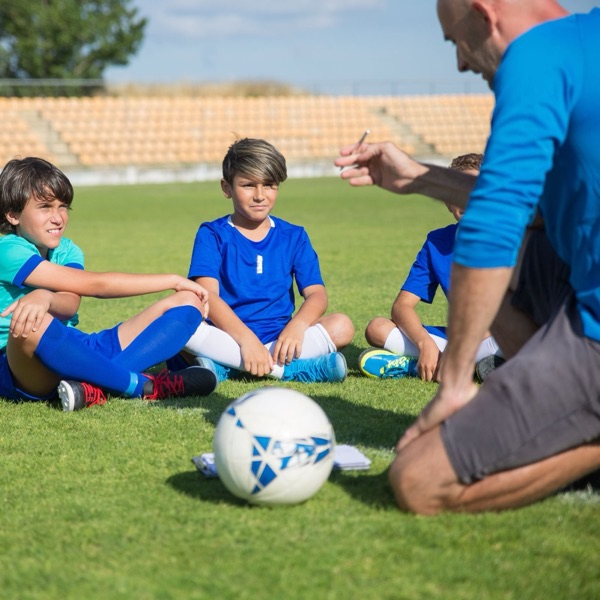
Game's over. You load the bag into the trunk, your kid climbs in the back, and you pull out of the lot without saying a word. The heater ticks. Your kid is staring at a car wash they've passed a hundred times, and you're sitting on about nine opinions about that play in the third quarter.
That quiet drive is what this post is about. Coaching your own child comes with two jobs, and your kid can tell which one is talking. The other parents will call it favoritism, and we'll get to them. First, how do you keep your relationship with your kid in one piece while you're holding the whistle?
Understand you are a parent first
Before your child ever played a down of football, a minute of soccer, ever got on base, or stepped on a court, they were your child, and you were their parent. Don't let the player-coach relationship ever come before the parent-child relationship. Even after a loss.
Your kid probably won't remember every call you made from the sideline. They will remember how it felt to climb into your car after a bad one. Say they dropped the pass, or struck out looking, or sat the bench most of the second half. As tired as you are, as frustrated as you are about the score, they're a kid checking to see if you're still glad they're yours. Can you do that for them? The scoreboard resets next week. A kid who wonders whether your love depends on their stat line takes a lot longer to reset. Win the parent job first, and the coaching job gets easier.
Harder on your own kid isn't the same as fair
Say it's the second week of the season and your daughter misses an easy goal. Everything in you wants to correct it loud. A little louder than you would for anybody else, so the bleachers can hear you're not that kind of coach that gives their kid preferential treatment.
We all feel that. And apparently plenty of parent-coaches act on it. There's a study of 16 parent-coaches in Australian football, and it found that worry about favoritism changed how they treated their own child. Some were deliberately critical of them at training and games, and some passed them over when handing out the weekly encouragement award. That's a small study, so treat it as a pattern you might recognize in yourself and not a law of nature.
The instinct to be tougher on your own kid feels responsible, but the better question is this: why would you treat your own child worse than you would someone else's? The better option is to treat our children the exact same as any other player. No better. No worse.
So fair doesn't mean harder, and it doesn't mean colder. It's one standard applied equally to all players. Same drills, same tone when you correct, same consequence for being late. The goal is that people can't even tell which of the players is yours.
There's a cost. Somebody will mutter anyway, because a parent in the bleachers will always watch how you treat your own kid. All you can do is make the system visible. A written playing time policy that everyone got in August does most of that work for you.
The ride home
Ben Dudley of PCA Portland wrote about catching himself before reviewing the game with his 5-year-old on the ride home. He wanted his son to know his support as a dad didn't depend on how the game went. Notice what he stopped, though. He didn't stop talking. He stopped coaching.
Some kids want to replay every possession, and silence would hurt them. If yours opens that door, walk through it and let them lead. If they don't, talk about them and not the game. "I liked watching you today. Where do you want to eat?" The skills talk can wait for practice, where you've got a cone to point at.
I find myself fighting this urge every Saturday. Immediately I want to jump into an X's and O's breakdown of what they could have done better, and how they can improve before the next game. But I have to set that aside, and remember: my kids are still just that, kids. And they deserve to be able to enjoy the rest of their day. After all, no other kid on the team has to go home with a coach demanding perfection.
Help them keep getting better
You still want your kid to improve. Of course you do. The trick is where that happens. Practice is the place for the skills talk. The car ride and the dinner table are for being their parent.
One way to keep growth healthy is to praise the things they control. Effort. Showing up. Trying the hard thing again after they messed it up. A kid who hears "I liked how you kept hustling" learns that getting better is about work, and work is something they can do tomorrow.
It also helps to let them set the pace. Ask what they want to work on this week, and let the answer be small. A kid who picks the goal owns it.
One simple idea is to close practice by asking the whole team, "Are we perfect?" They'll say "nooo." Then ask, "What can we do to keep getting better?" and let them answer. Your kid hears it as part of the group, not as the one being singled out. It's the same closing huddle from the first practice plan.
Then it's the next Saturday. Same car, same heater ticking.
"Hungry?" you say.
"Starving," says the back seat. That's the whole debrief, and for that day it's plenty.
Sources
- Tips For Coaching Your Own Child: A Coach Hat (Positive Coaching Alliance)
- Coaching Your Own Child (Jr. NBA)
- How Parents Can Resist Analyzing Kids Performance During The Car-Ride Home (Positive Coaching Alliance, Portland chapter)
- The parent-as-coach is perceived to be positive by a majority of female athletes (Coaching Science Abstracts)
- The experience of parent-coaches in youth sport: A qualitative case study from Australia (Journal of Amateur Sport)
- Report a concern (U.S. Center for SafeSport)
Questions coaches also ask
- Should I be harder on my own kid so nobody thinks I play favorites?
- No. Being tougher on your own child to satisfy the bleachers is still treating them differently, just in the other direction. A small study of parent-coaches found exactly that pattern, with some passing their own kid over for awards. Hold one standard for every player, same drills, same tone, same consequences. No better and no worse.
- What should I say to my kid on the car ride home after a game?
- Talk about them, not the game. Something like I liked watching you today, where do you want to eat. If your kid wants to replay every possession, let them lead and listen. If they do not, leave it alone. The skills talk waits for practice, where you have a cone to point at and the whole team is listening.
- How do I help my own child improve without singling them out?
- Do it at practice, inside the team. Praise what they control, like effort and trying the hard thing again after a miss. Let them pick one small thing to work on each week so they own it. Close practice with a question to the whole group, so your kid hears it as a teammate and not as the coach's kid.
- How do I handle parents who think I favor my own kid?
- Somebody will mutter no matter what, because parents watch how a coach treats his own child. You cannot control that. What you can do is make the system visible. A written playing time policy handed out in August, applied the same to every player, does most of that work. Then your kid should be hard to spot.
Nobody gets skipped
Nobody gets skipped. Sign up as a coach at cheatcodecoaching.app, then download Cheat Code Teams on the App Store.
Want to swap scripts and stories with other volunteer coaches? The Cheat Code Coaching community on Skool is free to join.