
Preseason parent meeting: what to say (free script and handout)
Hold a 20-minute meeting before practice one. Cover playing time, the 24-hour wait, sideline behavior, and safety, then let the parents talk.
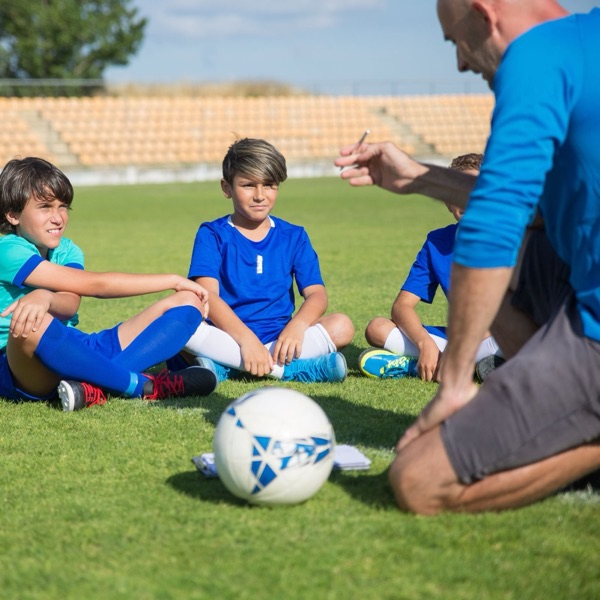
Picture the room. It's a Thursday night in the back of the rec center, and you've set out eleven folding chairs because you hoped for more than you'll get. Nobody's mad at you yet. Nobody's sat the bench, nobody's been yelled at, nobody's typed a long text at 11 p.m.
That's the whole reason to have a preseason parent meeting. It's the one night everybody still likes you. Below is a 20-minute agenda, a script to steal, and a one-page handout. Change all of it. Your sport, your league, and your parents will bend every piece.
The argument nobody knew they were having
Say it's 7:40 on a Saturday morning, second game of the season, and a dad is standing at the fence with his arms crossed. He thought his kid would play most of the game. You thought you were teaching eight-year-olds how to play at all. Neither of you is wrong. You just never compared notes.
I can't hand you research that says a meeting prevents this. What exists is advice from people who work with youth coaches, and it's consistent: Positive Coaching Alliance encourages a preseason meeting so ground rules for parent involvement are set at the start. I can't think of the downside.
Twenty minutes, and what each one costs
Twenty is my number. PCA's parent/guardian meeting agenda doesn't set a length, and my order only loosely follows theirs.
| Minutes | What you cover |
|---|---|
| 0 to 3 | Who you are, why you're here, and that you're a volunteer |
| 3 to 6 | Playing time |
| 6 to 9 | How parents reach you, and the 24-hour wait |
| 9 to 12 | Sideline behavior |
| 12 to 15 | Safety, forms, emergency contacts |
| 15 to 17 | How to raise a concern |
| 17 to 20 | Parents talk |
Book it before practice one, even if that means piggybacking on registration night. A meeting after the first game is a meeting after the first disagreement.
Playing time is where it gets gray. A little over half of current players in the Aspen Institute's survey (57%) said all players should get time or everyone should get equal time. Only 11% said just the best should play.
What you promise depends on who's in the chairs. Equal minutes is easy to keep with seven-year-olds on a rec team. With thirteen-year-olds who tried out, it can box you in by week three. "Everyone plays in every game, and minutes follow effort at practice" is a promise you can keep. Say it in plain numbers. If you want help deciding what your number is, read how to handle youth sports playing time first.
Then the 24-hour wait, which USA Football describes as a cooling-off period some schools use before parents raise a problem with a coach. Say you follow it too. Coaches who use it, like Ron Kordes of Assumption High in Kentucky, hold themselves to it, and that keeps it from sounding like a gag order. You can live with the eye rolls.
The wait has a limit, and the limit matters more. It covers playing time and strategy, not a child's safety or welfare. Those go to your league, or to the U.S. Center for SafeSport if your league falls under it, right away. Say out loud that the wait doesn't apply there.
Sideline behavior gets three minutes. PCA's agenda says to set behavior standards up front. With first-timers, a stern talk sounds like an accusation, so ask for what you want (cheer for both teams, leave the coaching to the coaches) and skip the list of what you're afraid of.
The part where you stop talking
Now the item that gets cut. The last three minutes belong to the parents. In PCA's agenda, parents share what they hope their kids gain from the season, so you can check it against your plan.
This feels like the riskiest minute. Say a mom in the second row says, quietly, that she hopes her son makes the high school team someday. No handout would ever have told you that, and you can answer it right there: here's what I can do this season, here's what I can't. Better now, as a sentence, than in October, as an argument.
A script to steal, and how to bend it
Use this in your first three minutes. Swap in your sport, your name, and your playing-time rule.
``` Hey everybody, thanks for coming. I'm [Name], and I'll be coaching [team]. Quick confession: I'm a volunteer. I do this because I like kids and I like [sport]. I will also mess something up this year, and I'd rather you hear that tonight than figure it out in week two.
Here's what I want for your kids: fun, better at [sport] by [month], and a feeling that they belong. Winning is nice. It's third on my list.
Playing time first. [Insert your rule, for example: every player plays at least half of every game.] If your kid sits more than you expect, there will be a reason, and I'll tell you what it is.
I'm asking three things. Get your kid here on time and fed. Cheer for every kid on both teams. Leave the coaching to me during games.
I want to hear your concerns. I only ask that we all wait 24 hours before bringing one up. As tired as I am after a game, as sore as I am about a loss, I'll wait 24 hours before I answer a heated one too. Can you do that for me?
Then I want to hear from you. What do you hope your kid gets out of this season? ```
The handout, for the parents who weren't listening
Some families won't come. Send the handout the same night and ask each family to reply "got it." Then say one expectation out loud at the first practice (the 24-hour wait is a good one).
Check with your league before asking anyone to sign anything, since many leagues require medical and emergency forms. A signature can make a friendly page feel like a contract. PCA also has a parent pledge if you want something softer. Copy this and fill in the brackets.
``` PARENT EXPECTATIONS: [TEAM NAME], [SEASON] Coach: [Name] Phone: [number] Email: [address]
Playing time: [Your rule, in one sentence.] Attendance and effort at practice affect roles, not whether a child plays. The 24-hour rule: After a game or practice, wait 24 hours before raising a concern with me. I'll do the same before responding to a heated message. Safety: Medical and emergency forms are due [date]. Tell me about allergies and medications. To report a concern about a child's safety, contact [league contact] or the U.S. Center for SafeSport at 833-5US-SAFE. Concerns: Wait 24 hours, then message me to set up a time to talk. If we can't resolve it, contact [league director]. ```
Back to the folding chairs
So it's 7:25 and maybe seven of the eleven chairs have somebody in them. That's fine. Someone asks a question you didn't plan for, you answer it honestly, and that's the meeting working.
Then you stack the chairs and shut off the lights. At some point you'll hear from one of these parents again, maybe on a Tuesday night at 9:47. When you do, you'll both have a sheet of paper and a promise you made out loud.
Sources
- Parent/Guardian Meeting Agenda For Coaches (Positive Coaching Alliance)
- Coaching Parents for a Positive Sports Culture (Positive Coaching Alliance)
- Aspen Institute national survey of youth and sports: 15 key findings (Aspen Institute Project Play)
- It's time to adopt the 24-hour rule for sports parents (USA Football)
- Team communication: 24 hour rule with unhappy parents and coaches (The Art of Coaching Volleyball)
- Report a concern (U.S. Center for SafeSport)
Questions coaches also ask
- When should a youth coach hold the preseason parent meeting?
- Before practice one, even if that means piggybacking on registration night. The whole point is that nobody is mad at you yet. Nobody has sat the bench or typed a long text at 11 p.m. A meeting after the first game is a meeting after the first disagreement, and you have lost the easy version of every conversation.
- How long should a preseason parent meeting be?
- Twenty minutes is my number. Three on who you are and that you are a volunteer, three on playing time, three on how parents reach you and the 24-hour wait, three on sideline behavior, three on safety and forms, two on how to raise a concern, and the last three belong to the parents.
- What is the 24-hour rule and what does it not cover?
- After a game or practice, parents wait 24 hours before raising a concern with the coach, and the coach does the same before answering a heated message. It covers playing time and strategy only. Anything touching a child's safety or welfare goes to your league, or to the U.S. Center for SafeSport, right away. Say that out loud.
- Should parents sign the expectations handout?
- Check with your league first, since many already require medical and emergency forms. A signature can make a friendly page feel like a contract. I would rather send the handout the same night, ask each family to reply got it, and then say one expectation out loud at the first practice so the families who skipped still hear it.
Nobody gets skipped
Nobody gets skipped. Sign up as a coach at cheatcodecoaching.app, then download Cheat Code Teams on the App Store.
Want to swap scripts and stories with other volunteer coaches? The Cheat Code Coaching community on Skool is free to join.